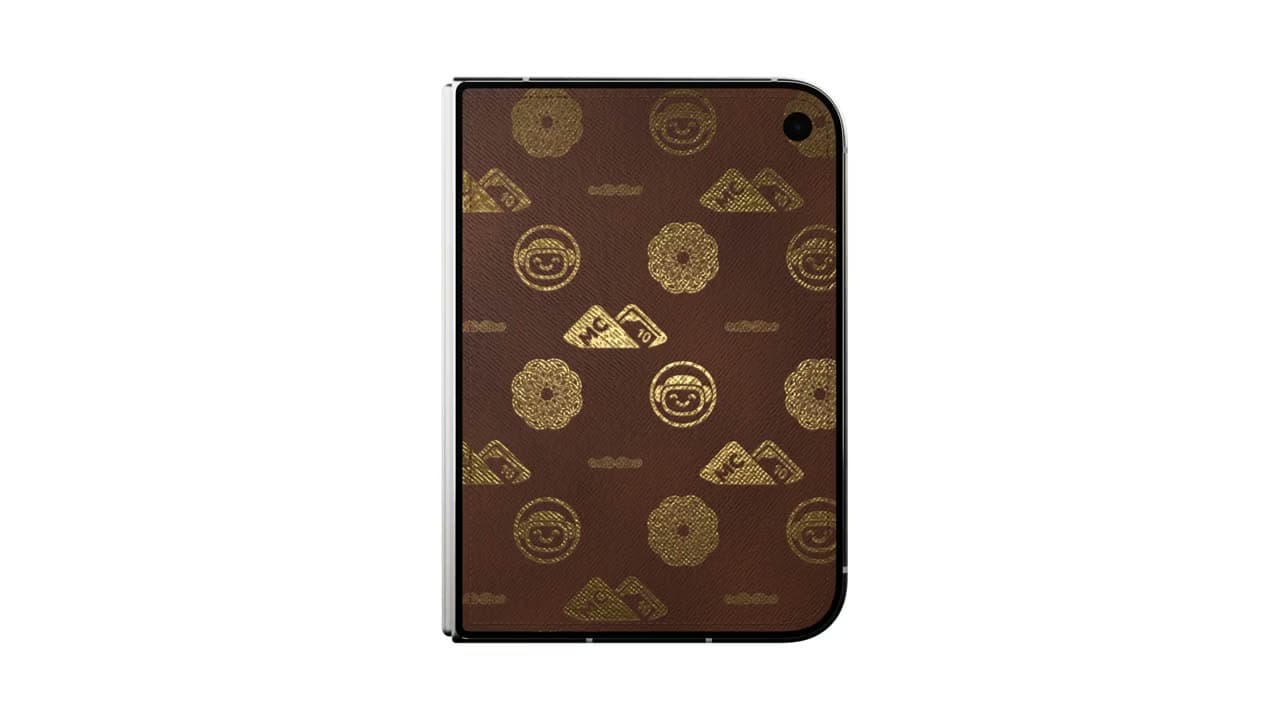
MoneyCoach connects to your bank accounts across the US and Europe. On iPhone Duo, those accounts live in a leather wallet that opens with the hinge. This is how we built it, and everything we threw away on the way.
- days from first sketch to ship
- 19
- sounds, chosen one by one, from a card sliding home to the rustle of paper
- 14
- materials that each feel different under your thumb: card, cash and paper
- 3
- banknotes at true scale, from €5 to €500
- 7
- monograms screened for trademark risk, 29 shipped
- 45
- foil finishes, from gold that shimmers as you tilt to a quiet blind press
- 10
- products in the Atelier
- 52
- phrases, each written in 16 languages
- 219
- automated tests that guard the details
- 161
The question
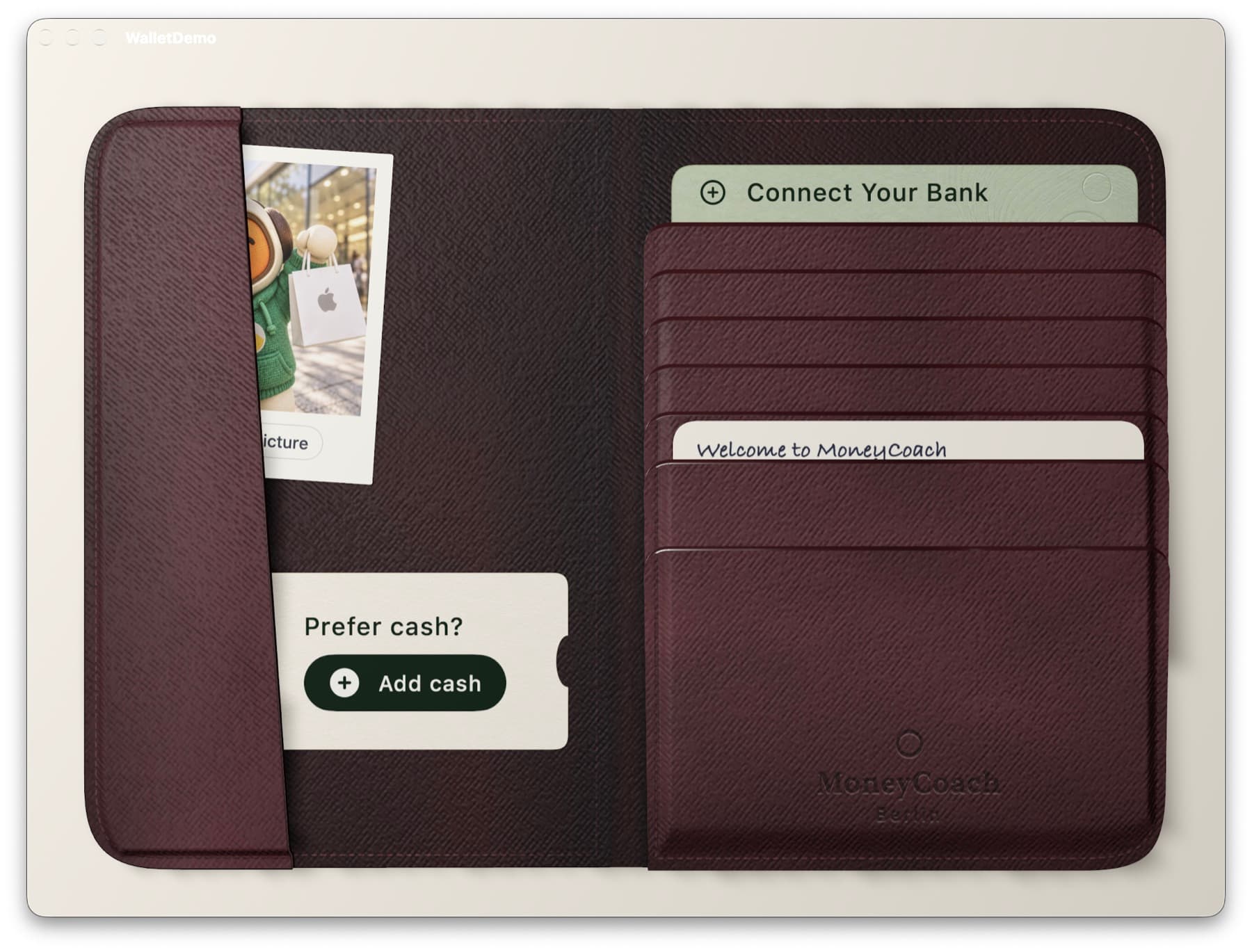
A phone that folds has the shape of a wallet. The Duo's cover display is 7.7 by 11.2 cm, almost exactly a card wallet. Open it and you get two screens and a hinge between them. So we asked a simple question: what if your money felt like something you could hold again?
We started with real wallets, not with code. We held fine leather bifolds next to the Duo and asked what makes a wallet feel good in the hand. Then we put them away. We took no patterns and no logos. Our wallet had to be ours.
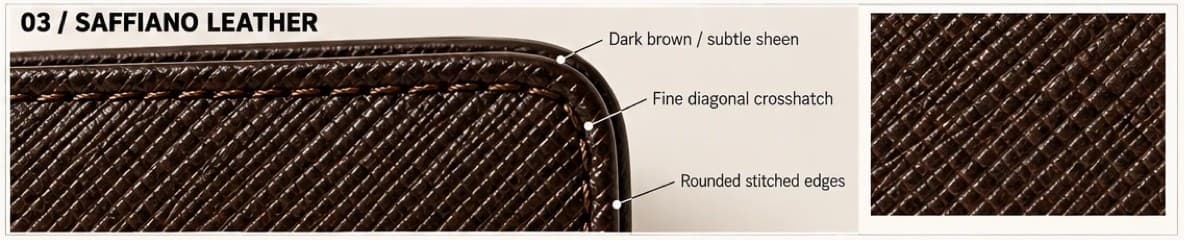
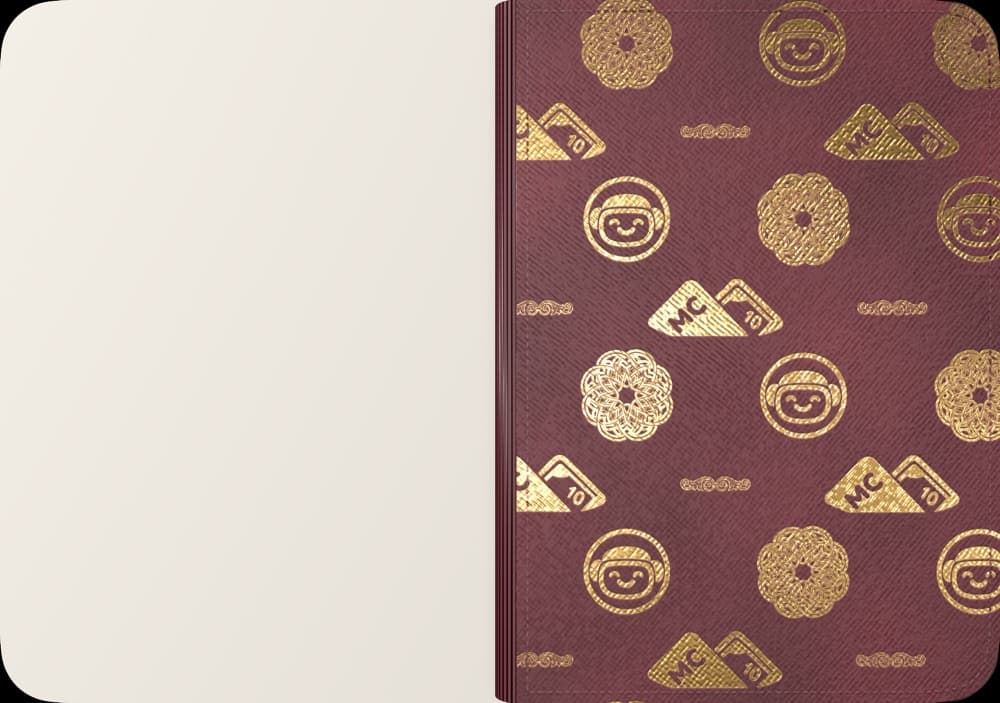
Then we studied the materials themselves. For each one we wrote down how it should look and behave. For the leather: Saffiano, dark brown with a subtle sheen, a fine diagonal crosshatch and rounded, stitched edges. Only after that did we build anything.
Real 3D, from day one
An earlier experiment faked the wallet with flat layers that only looked deep. It held up until you tilted the phone. So on day one we threw it away and decided the wallet would be a real object, or nothing.
Everything after that is real 3D. The cover moves with the hinge as you open the phone. A card comes out of its pocket the way a card does in your hand, and we kept at it until it did.
Modelled, not painted
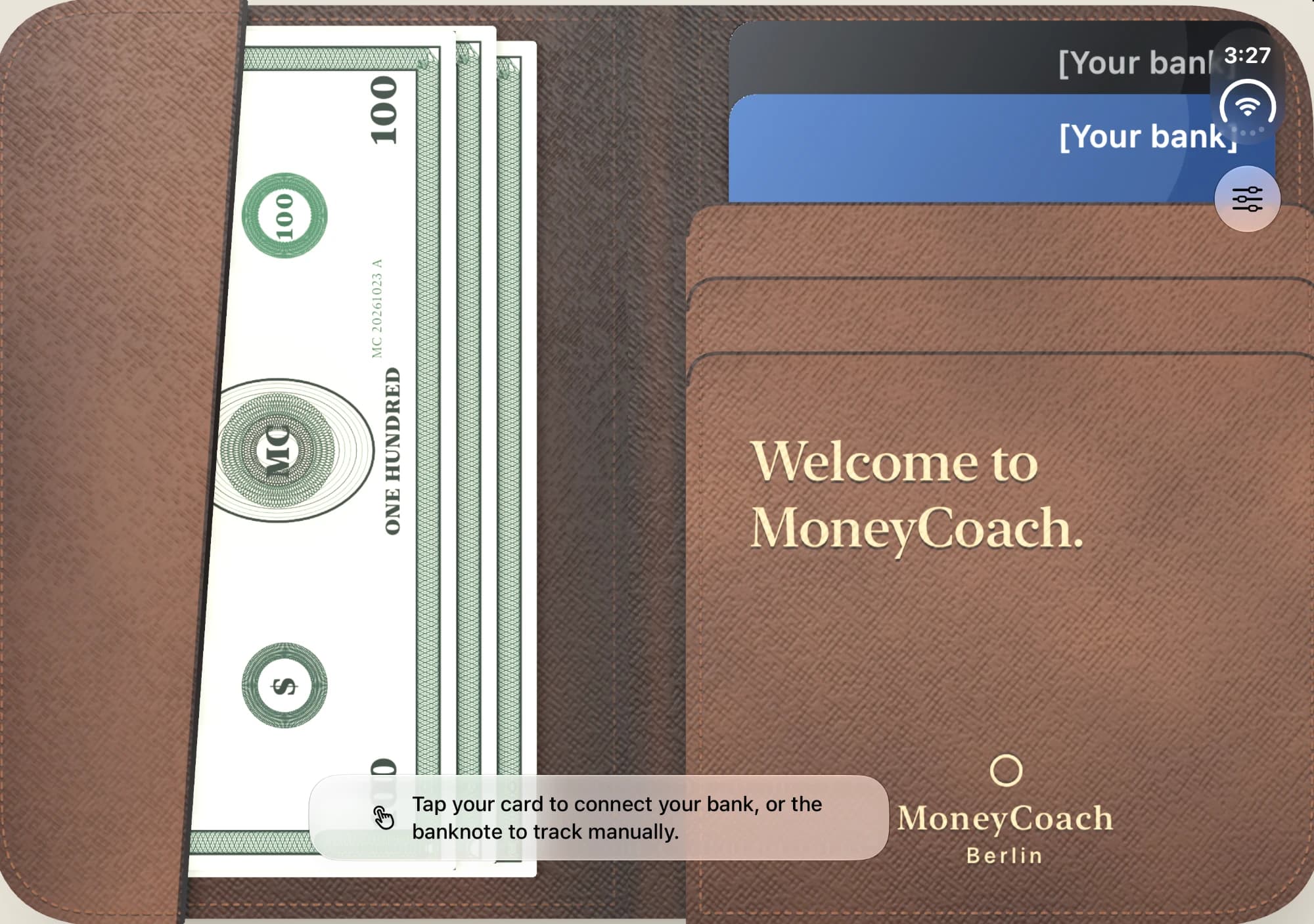
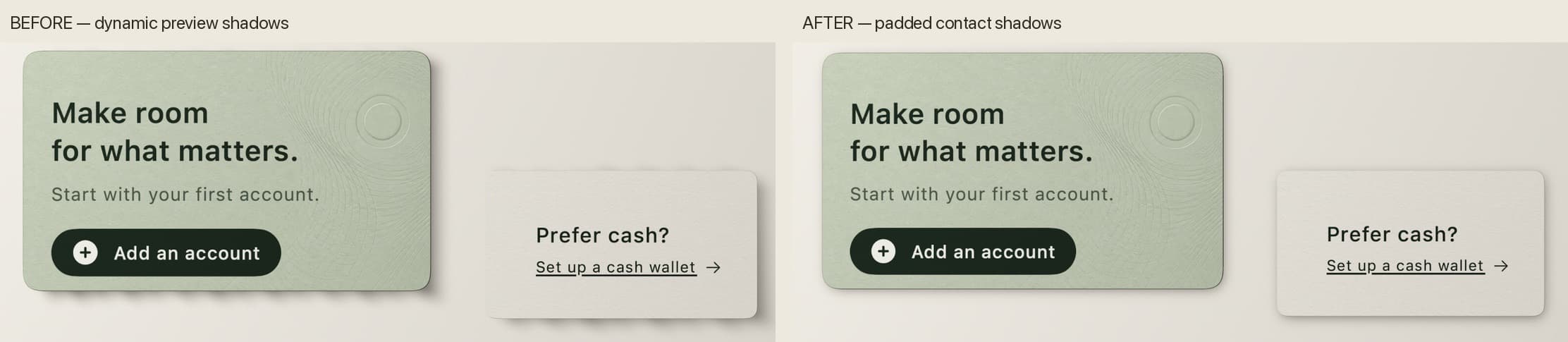
By October 1 the pockets were no longer pictures of pockets. They have depth, and their edges are worn the way a loved wallet wears. The light finds the grain of the leather, and the wallet answers when you tilt the phone. Each of these took many evenings to get right.
Following the hinge
The hinge is the whole point of the Duo, and our first version got it wrong. Flat, it looked perfect. Half open, the two sides of the wallet no longer agreed with each other.
We started the hinge again from scratch. Then we opened and closed a real Duo, again and again, at every angle, until the leather looked like one piece across the fold. When you tap Continue, the wallet closes with a satisfying weight.
Then we rebuilt how the wallet follows the hinge, so it stays smooth at every angle, from closed to flat.
What we threw away
Most of the work is deciding what not to ship. A few of the ideas that did not survive:
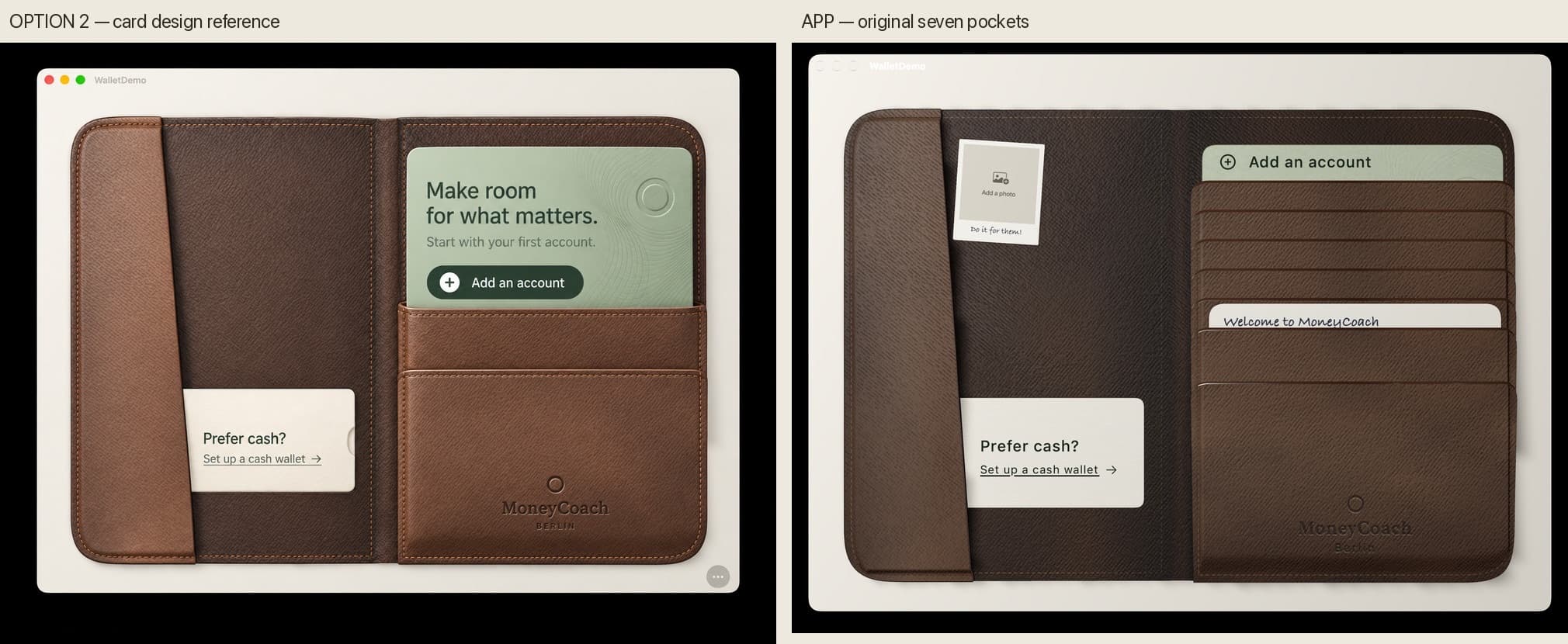
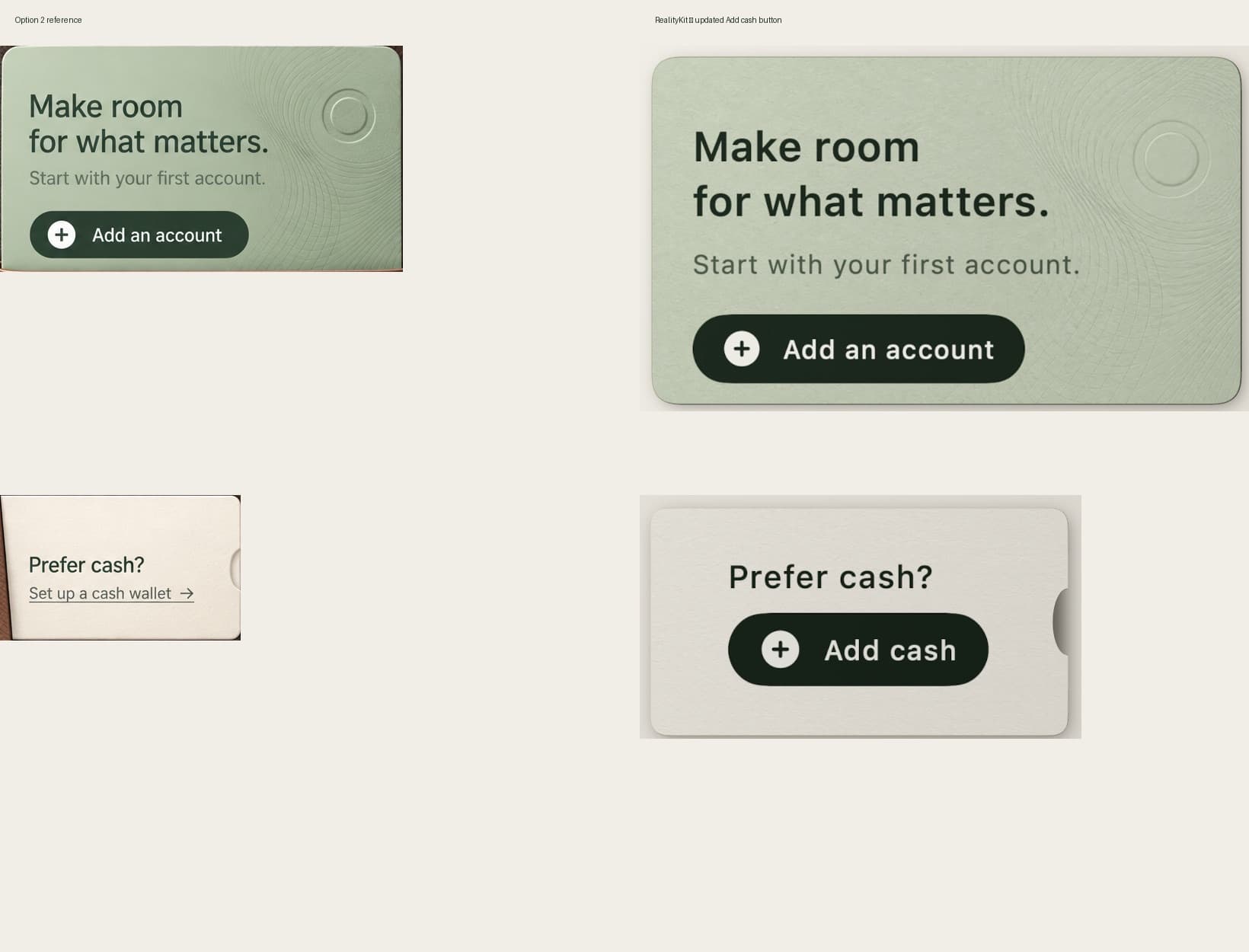
A crossfade between leathers.A plain fade from one leather to the next felt cheap. Changing a leather now feels like a small moment of its own.Hiding five pocket layers.A cleaner card design looked good on its own and empty in the wallet. The seven original pockets stayed.Our first take on the fold.It looked right flat and wrong half open. We started the hinge again from scratch.A frosted-glass header over the wallet.It looked busy. A calm, solid header lets the leather be the focus.The Ligature monogram.Dropped. Rosette became the free default.
A gift you unwrap
The first time you open the wallet, something is waiting for you. We will not describe it here, and we will not show it.
We can tell you this much: we threw away our first idea for it, and we tuned the rest again and again until it felt right in the hand. It happens only once. Open your Duo and see for yourself.
The Atelier: 52 products and 45 monograms
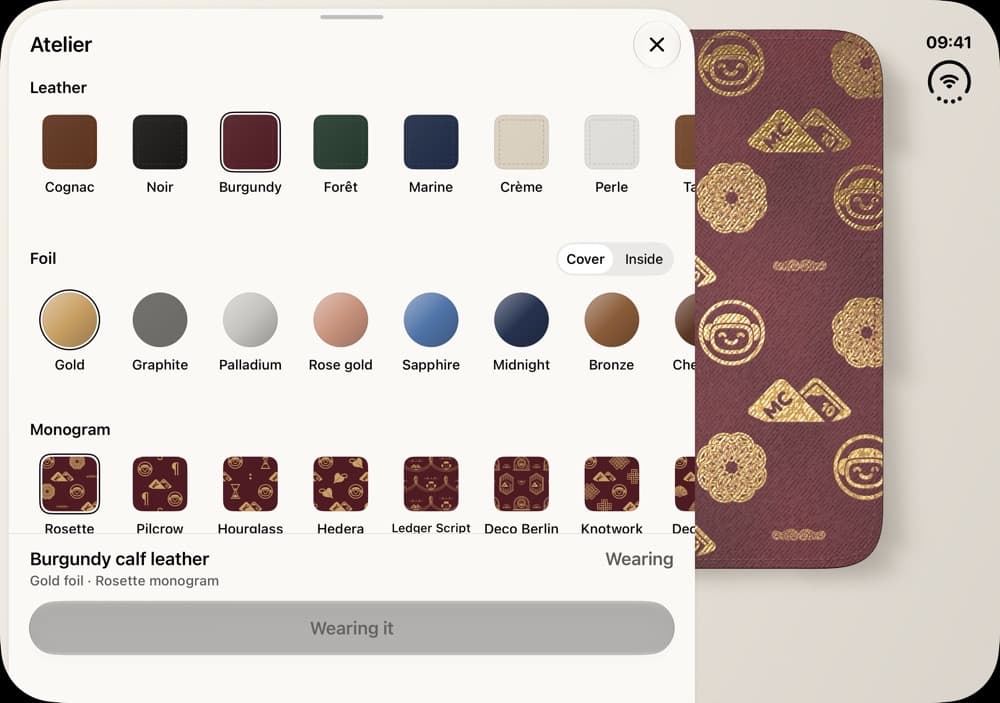
Your wallet is yours to dress. The Atelier sells leathers, foils, monograms and collections: 52 products in total. That is 8 leather dyes, 7 foils, 27 monograms, 9 collections and one product for everything. A collection always costs less than its pieces.
The monograms took the longest. We screened 45 designs for trademark risk over six rounds. Our first pattern scored 28 out of 100 and was withdrawn. Ornaments that echoed national symbols or well-known logos were cut. Everything that shipped, we drew ourselves.
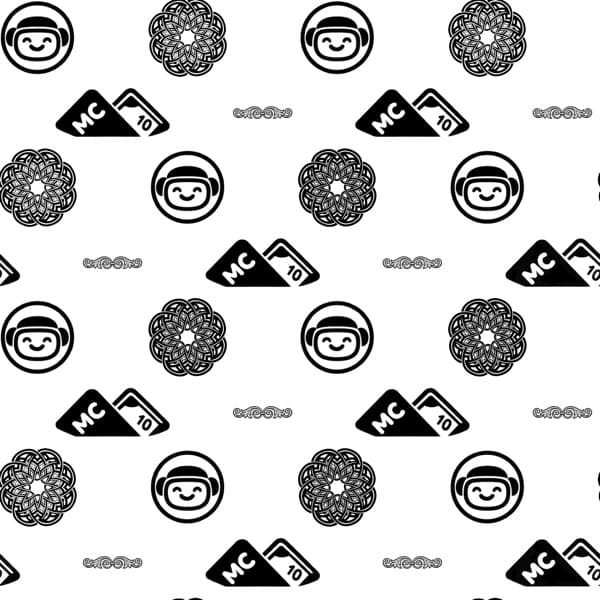
Rosette
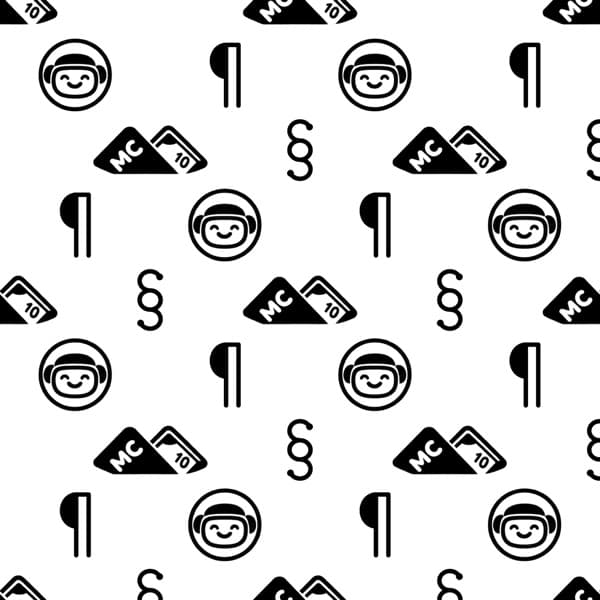
Pilcrow
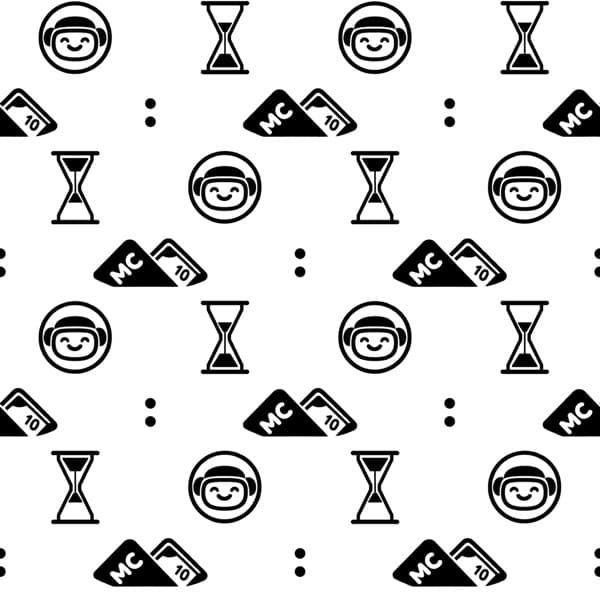
Hourglass
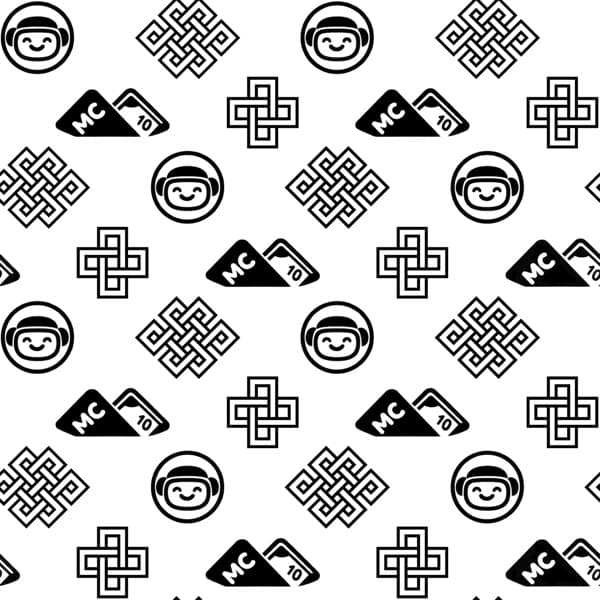
Knotwork
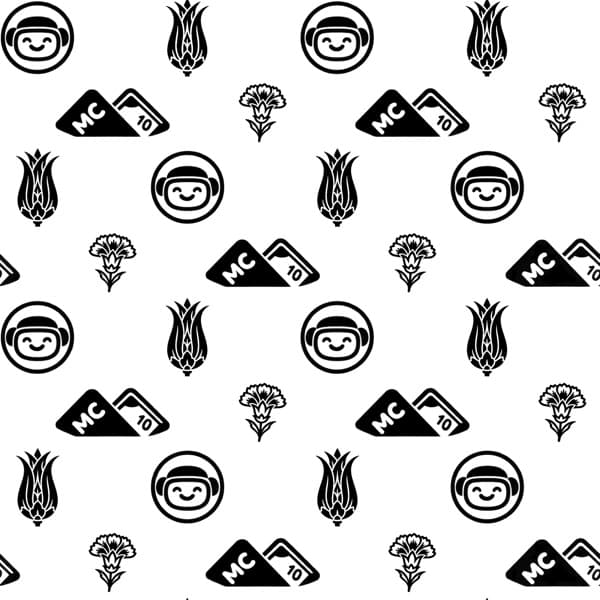
Iznik
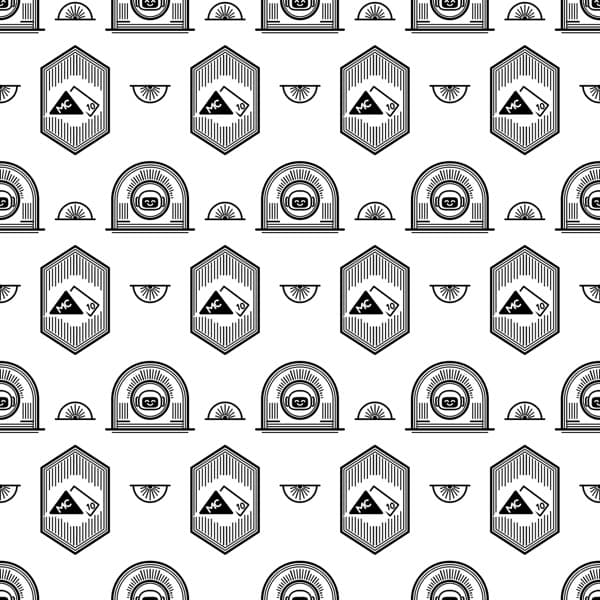
Deco Berlin
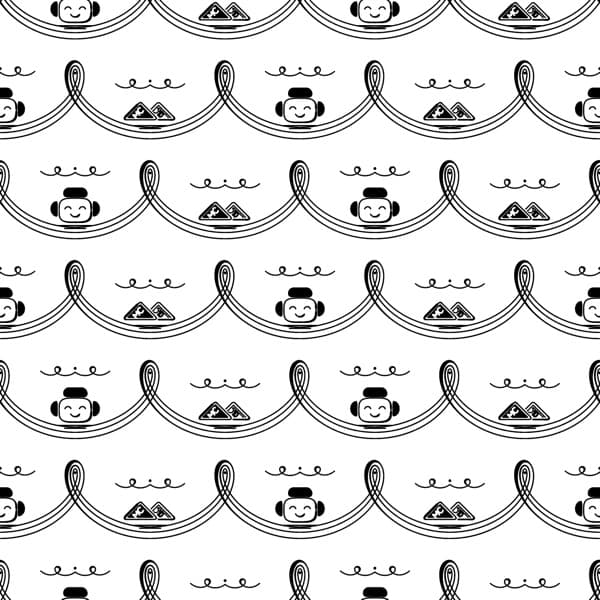
Ledger Script
Coin Imbrication
Girih After Dark
Hedera
Vault Guilloché
Folded Currency
Foil that catches the light
The foil is one of the smallest things on the wallet, and one of the most studied. It is pressed into the leather in your initials and the monogram, the way a leather maker stamps a real wallet.
There are ten finishes, and each one answers the light in its own way. The metals, gold, palladium, rose gold, sapphire and bronze, glint as you tilt the phone. The prints, graphite, midnight and chestnut, stay quiet and soft. Lacquer is black and glossy, but only on the grain. Tonal has no foil at all. It is the press alone, so you see the letters only in the leather itself.
Gold took the longest. Tilt the Duo and a soft shimmer runs across the foil, following the light the way it moves over a real gold stamp. We tuned each finish until a metal looked like metal and a print looked like ink.
The small things
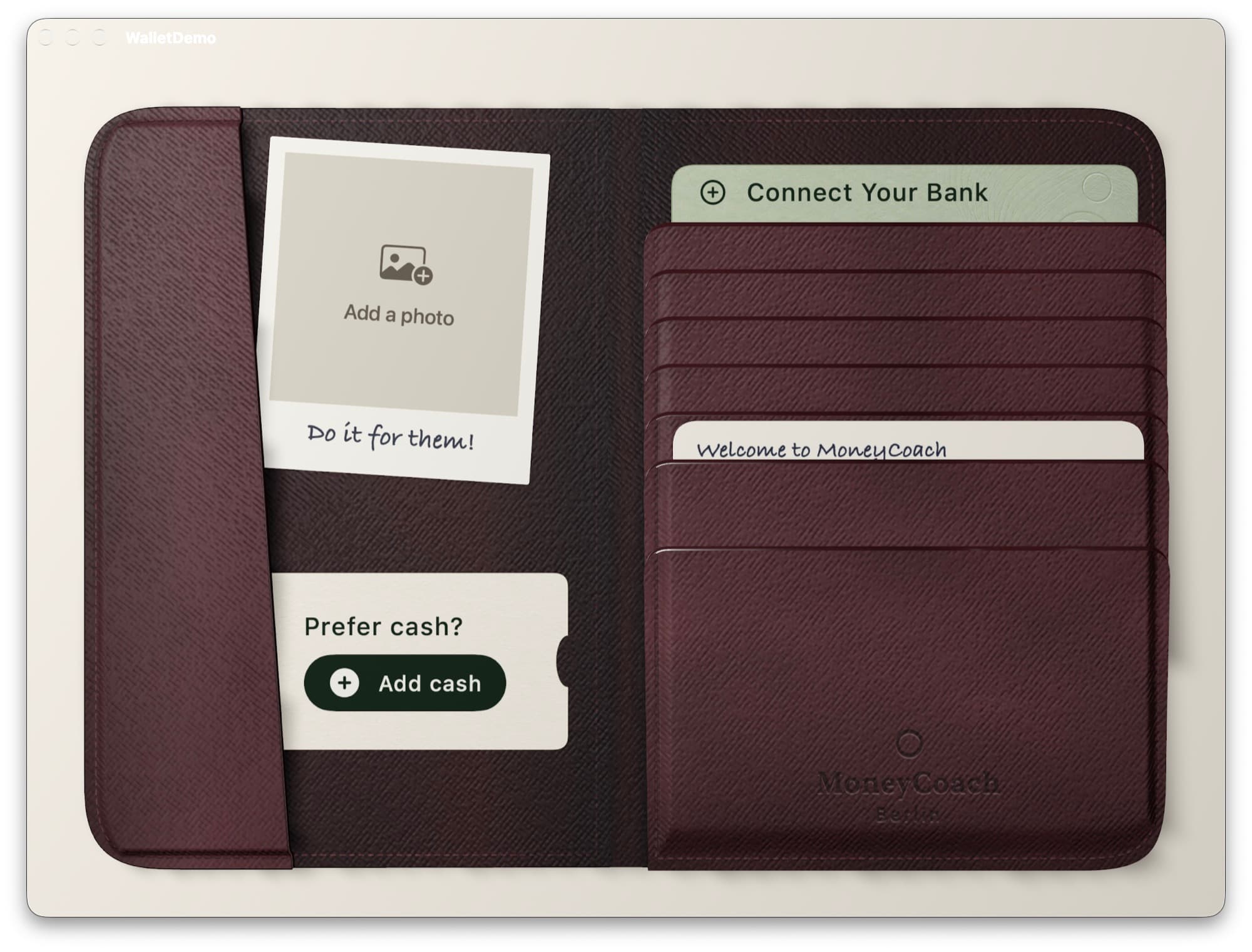
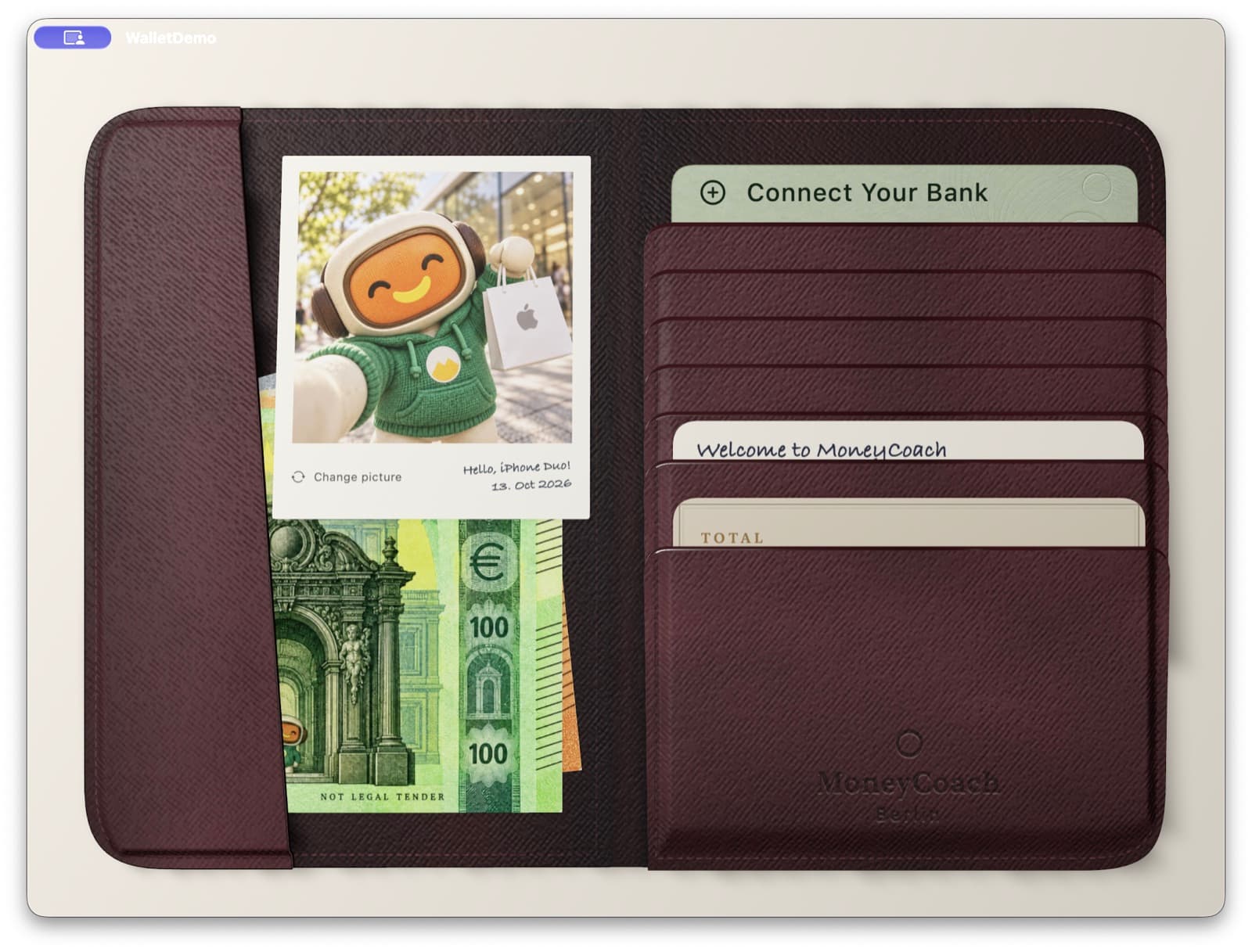
Cash is a folded wad at true scale, in seven denominations from 5 to 500, with layered paper folds and a sound when it goes back in. You can slip a photo into the wallet like a polaroid, above or below the cash. Your total sits on a card in the bottom pocket. That card went through four versions: paper, stationery, a "TOTAL" in the pocket, and finally a textured passbook.
For everyone, in 16 languages
A 3D object is easy to make inaccessible. Every card in the wallet works with VoiceOver and the other accessibility settings, so the wallet reads as clearly as it looks. The whole experience ships in 16 languages.
A real bank underneath
The wallet is not a toy. Each card is a real account. MoneyCoach connects securely to online banks across the US and Europe, so the leather in your hand shows your actual money. When you want full control, switch to the Liquid Glass interface for budgets and everything else.
What it took
Nineteen days. Most of them went into things you will never notice on purpose: the edge of a pocket, the weight of a closing cover, the sound of paper. We threw away more than we kept.
For all nineteen of them, I woke up between 4 and 5 in the morning. The house was dark and quiet, and my family was still asleep. Those early hours belonged to the wallet.
Nobody asked me to. It was an urge to make something wonderful, something you would actually want to hold. And the launch date was not going to move, so every one of those mornings counted.
I did not want a wallet that looks real in a screenshot. I wanted one that feels right in your hand, every time you open your phone. I hope you feel the care when you hold it.
19 days, day by day
Sep 29
We hold real wallets next to the Duo and decide it has to be a real object, not a picture of one.
Oct 1
The pockets stop looking painted on. For the first time, the leather feels like leather.
Oct 7
A big day: the wallet closes with weight, banknotes arrive, metal catches the light, and every material gets its own feel under your thumb.
Oct 9
The Atelier opens with 9 products. Any number of bank cards fit in the wallet.
Oct 10
45 monogram designs screened for trademark risk over six rounds.
Oct 11
The surprise for your first open takes its final form. We are keeping it a secret.
Oct 12
The busiest day. The wallet moves smoothly at every angle, the fold finally looks right, cash and pockets are reworked, the catalog grows to 52.
Oct 13–17
The total card reaches its fourth version. 16 languages, gentler sounds, and a greeting note for Duo owners.
See it move
This video is hosted on YouTube. When you load it, data such as your IP address is sent to Google, and Google may set cookies. Privacy Policy
Hold your money again
MoneyCoach for iPhone Duo is on the App Store now.
Get MoneyCoachJournalists: the media kit has high-resolution images and the video.