Credit cards are tools, not free purchasing power. They can simplify payments and provide useful protections, but their risks become expensive when spending is disconnected from cash, balances carry high interest, or rewards encourage purchases that would not otherwise happen.
The seven main risks are interest, minimum-payment debt, overspending, fees and special transaction costs, credit-score pressure, reward distortion, and fraud.
1. Interest makes past spending compete with today's budget
When you carry a balance, part of each future paycheck pays for past purchases plus finance charges. The APR and the issuer's balance-calculation method determine the cost.
Before using a card for something you cannot pay from available cash, estimate the total repayment—not just next month's minimum. The statement's minimum-payment warning shows how minimum-only repayment can increase time and interest.
The practical safeguard is to treat the card as a payment method for budgeted spending, not as an extension of income. When possible and consistent with the account terms, pay the statement balance in full by the due date.
2. Minimum payments can hide slow repayment
The minimum payment prevents the account from immediately being treated as late, but it is designed to be smaller than the full balance. Paying only that amount can leave debt outstanding for years, depending on the balance and rate.
The CFPB's credit-card payment guide explains that missing the minimum can lead to a late fee, loss of promotional terms, a penalty APR on new purchases, and damage to credit history. Paying more than the minimum reduces interest and payoff time.
If the full balance is not affordable:
- stop adding nonessential charges;
- pay at least the required amount on time;
- choose a fixed additional payment your budget can sustain; and
- contact the issuer early if you expect difficulty.
3. Delayed cash feedback can cause overspending
A bank-account purchase reduces cash immediately. A card purchase can feel separate from the money needed to pay it later. Rewards, saved card details, and one-tap checkout add more distance.
Create a credit-card category or account in your budget and record purchases when they happen, not when the bill is paid. The payment is then a transfer of already-accounted-for money rather than a surprise expense.
A useful test before buying is: “Could I pay this amount from the budget today?” If not, the purchase needs a deliberate financing decision, including its full cost.
4. Fees and special transactions can behave differently
Cards may charge annual, late, returned-payment, balance-transfer, foreign-transaction, or cash-advance fees. Cash advances may have a separate APR and may begin accruing interest without the purchase grace period.
Read the pricing table and agreement before using a balance-transfer check, withdrawing cash, buying a cash equivalent, or assuming a promotional rate covers every transaction. A “0%” promotion can still include a transfer fee and an expiration date.
Set reminders several days before the due date and keep enough money in the payment account. An automatic payment does not protect you if the bank debit is returned.
5. High balances can pressure credit scores
Scoring models consider several factors, including payment history, account age, and how close balances are to credit limits. The exact effect varies by scoring model and report.
The CFPB advises paying on time and keeping balances low relative to available credit. Its credit-score overview notes that moving most balances onto one card or getting close to a limit may hurt a score.
Do not spend money merely to chase a utilization percentage. The safer approach is to keep debt manageable, pay on time, and check credit reports for errors.
6. Rewards can distort decisions
Cashback, points, and miles have value only when they exceed the additional cost and do not change the purchase decision. A 2% reward cannot compensate for paying interest on a carried balance or buying something unnecessary.
Use this order:
- decide whether the purchase fits the budget;
- compare the real price and return policy;
- choose the payment method; and
- treat rewards as a small rebate, not permission to spend.
Track annual fees and credits too. If you would not buy the credited service without the card, it is not necessarily saving money.
7. Fraud and billing errors require attention
Transaction alerts can reveal an unauthorized charge quickly, but alerts do not replace statement review. Merchant names can differ from store names, so investigate before disputing while still acting promptly.
Each month:
- match purchases and refunds;
- check recurring subscriptions;
- review cards stored with old services;
- confirm that payments posted; and
- use the issuer's official contact channel for suspicious activity.
Do not send card numbers, one-time codes, or login credentials through an unsolicited message. Navigate to the issuer's app or website yourself.
A safer credit-card workflow
| When | Action |
|---|---|
| Before purchase | Confirm the category has money available |
| After purchase | Record or sync the transaction and keep the receipt |
| Weekly | Review unfamiliar, pending, or duplicate charges |
| Statement close | Reconcile the statement balance and interest section |
| Before due date | Ensure the issuer receives at least the required payment |
| Monthly | Review utilization, subscriptions, fees, and payoff progress |
Understand the difference between the statement closing date and payment due date with the credit-card billing-cycle guide.
Track a credit card in MoneyCoach
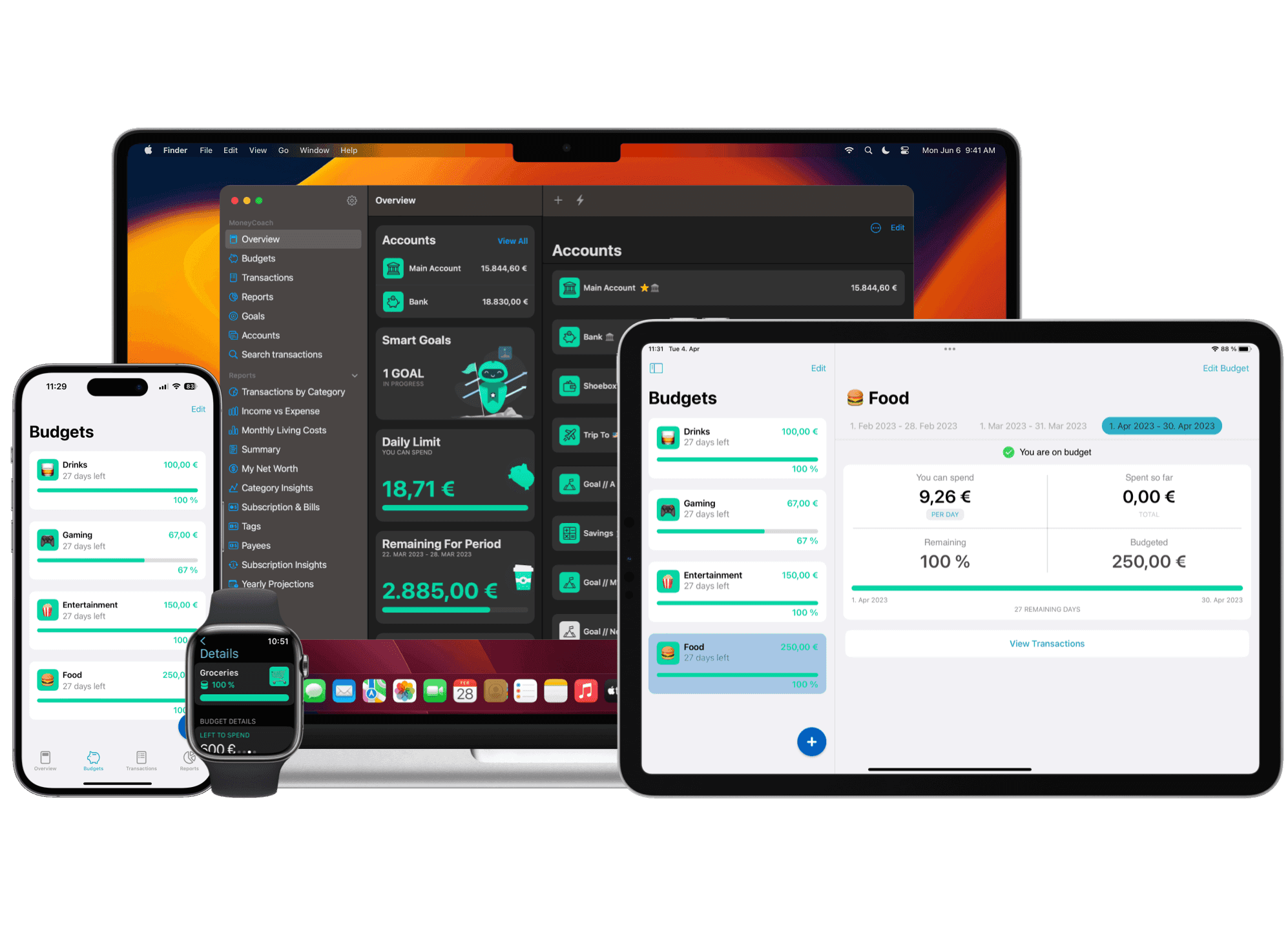
MoneyCoach can keep purchases visible alongside the rest of your budget. Create the card as an account, add or import transactions, and treat payments from your bank as transfers so they do not double-count spending.
Use the credit-card tracking and payment-reminder guide for setup. The issuer's statement remains the source of truth for the required payment, rate, fees, and dispute instructions.
Credit cards are safest when every purchase has a budget category, every statement is reviewed, and every carried balance has a payoff plan.