
Track a credit card in MoneyCoach by creating a Credit Card account, adding purchases to that account, and recording card payments as transfers from your checking account to the credit card account. This keeps spending, statement balance, payment due dates, and repayments in one place.
TL;DR
- Add a manual account with type Credit Card.
- Enter the current balance, card limit, statement details, and due dates.
- Add purchases as expenses from the credit card account.
- Pay the card with a transfer from checking to the credit card account.
- Use reminders so you do not miss the payment due date.
Step-by-step guide
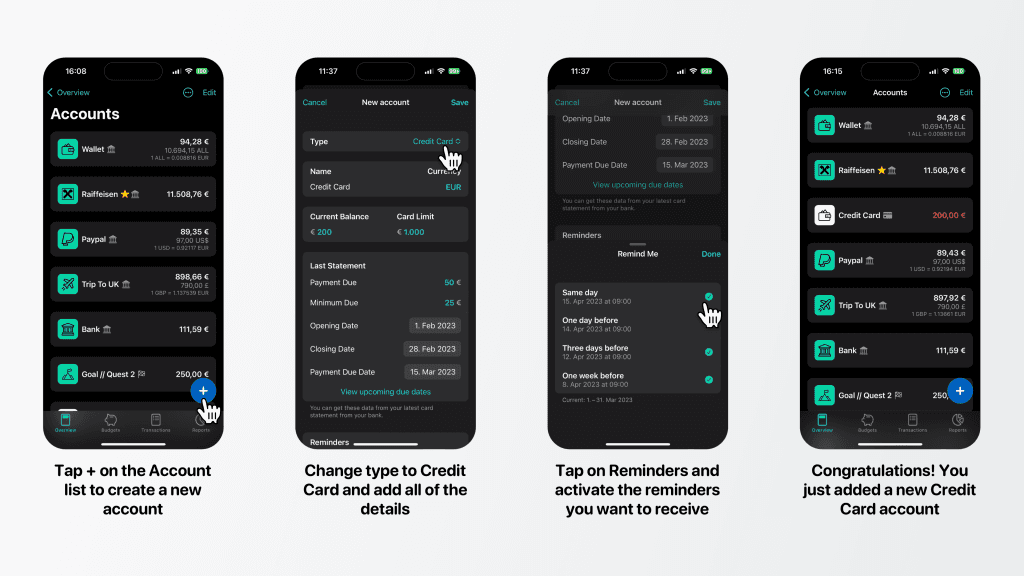
- Open Accounts.
- Tap the + button.
- Choose Add Manual Account if MoneyCoach asks how you want to add an account.
- In the account type picker, choose Credit Card.
- Enter the credit card name.
- Choose the card currency while creating the account.
- Enter the current balance and card limit.
- In Last Statement, enter Payment due and Minimum due if you have statement values.
- Set the Opening Date and Payment Due Date for the last statement.
- Tap View upcoming due dates if you want to review future due dates.
- Configure Reminders.
- Choose an icon and account group if needed.
- Turn on Business Account only if this card belongs to your business tracking.
- Tap Save.
Credit Card, Savings, and Loan account types are Premium account types.
How to use the credit card account
After saving the card, add purchases to it the same way you add expenses to any other account. Open the credit card account to see its dedicated Details screen.
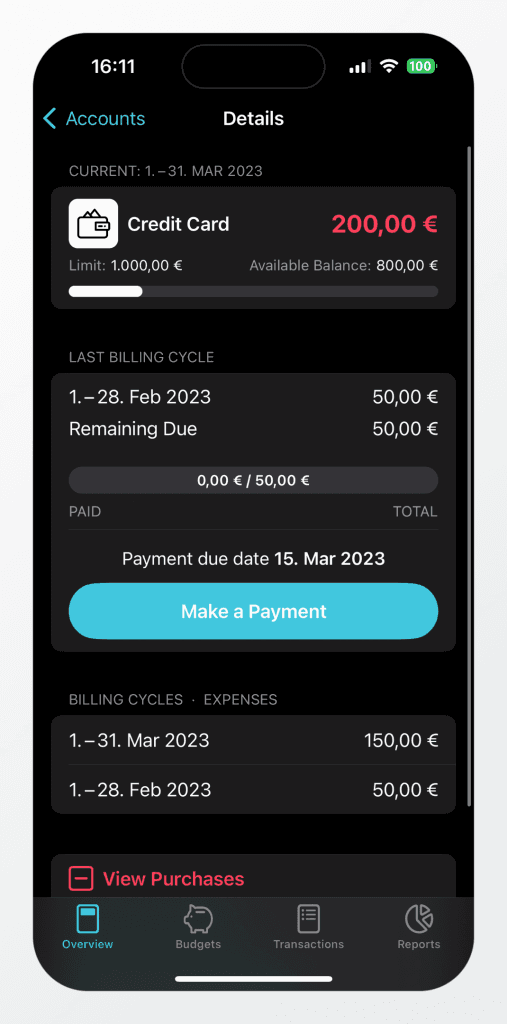
The top section shows the current billing cycle, card balance, limit, and available balance. Tapping the card opens purchases for the current billing cycle.
How to record a credit card payment
When you pay your card from a checking account, use a transfer, not an expense.
- Start a new transfer.
- Set the checking account as the Sender.
- Set the credit card account as the Receiver.
- Enter the payment amount.
- Save the transfer.
This reduces the checking account balance and reduces what you owe on the credit card account without double-counting the payment as new spending.
Do not add a second transaction from the credit card side after saving the transfer. MoneyCoach records the sender side and the receiver side together, so adding another manual entry can duplicate the payment.
If the credit card balance becomes positive after a payment, check these items:
- The transfer direction should be Sender: checking account and Receiver: credit card account.
- The credit card opening or current balance should use the correct sign for what you owe.
- Card purchases should be entered as expenses on the credit card account.
- A positive balance can also be correct when the card has been overpaid and now has credit available.
Additional information
The Last Billing Cycle section shows the previous statement, amount due, paid amount, remaining amount, and payment due date. The Billing Cycles - Expenses section lists statement periods and expense totals.
Use View purchases, View payments, and View all transactions to inspect the card activity. If you are trying to reduce credit card debt, pair this guide with the Credit Card Payoff Calculator.